

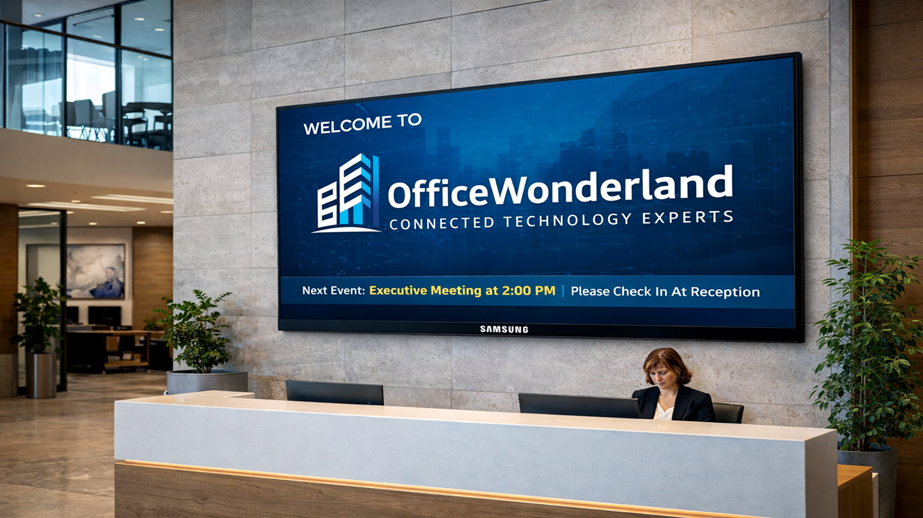
1. When Digital Signage Makes More Sense
Signage has always helped businesses communicate information, guide visitors and reinforce their identity. The major difference today is that organisations can choose between fixed physical signs and digital displays. Digital signage uses screens to deliver changing content, while traditional signage includes printed boards, acrylic signs, metal letters, ACP panels, vinyl graphics and other permanent or semi-permanent solutions.
The biggest strength of digital signage is flexibility. A screen can show a welcome message in the morning, an event schedule later in the day and company announcements afterwards. Content can include images, videos, animations, presentations, dashboards and other dynamic information.
This makes digital signage useful in office receptions, hotels, retail environments, hospitals, educational institutions and large corporate facilities. A central content system can also make it easier to manage information across several screens or locations.
Digital displays are particularly valuable when information changes frequently. A meeting-room screen can show availability, while a reception display can welcome specific visitors. Promotional campaigns can also be changed without printing and installing a new poster.
However, digital does not automatically mean better. Screens need electricity, hardware, software and content management. A technical failure can interrupt communication, and poorly designed animations can make information difficult to read. Digital signage works best when content is short, readable and updated with a clear purpose.
2. Where Traditional Signage Still Wins
Traditional signage remains extremely useful because many messages do not need to change. Room numbers, safety instructions, directional signs, permanent branding and building identification are often better suited to physical signage. Once installed, these signs do not depend on power or a network connection.
Traditional signage can also provide a stronger architectural feel. Acrylic lettering can create a polished reception, metal letters can add a premium appearance and ACP panels can provide a clean surface for larger sign systems. Printed wall graphics can introduce brand colours and visual storytelling across an office.
Cost is another consideration. Digital systems usually involve hardware and ongoing technical requirements, while traditional signs often have a more predictable production and installation cost. If a message will remain unchanged for years, a physical sign may be the more practical option.
For many businesses, the most effective solution is a combination. A digital display can handle changing communication at reception, while acrylic room signs, metal directional elements and permanent safety signs provide reliable information throughout the building.
The decision should therefore begin with the purpose of the message. Consider how frequently it changes, whether video or animation is necessary, whether electricity and connectivity are available, how long the sign is expected to remain relevant and how difficult it would be to replace. Digital signage is powerful for changing communication; traditional signage is dependable for permanent information. Together, they can create a complete and consistent signage system.
