Make Your Business Easier to Understand
A brochure is a compact sales and communication tool that can introduce a business, explain its services and support a customer conversation. Although brochures are simple physical documents, their effectiveness depends heavily on how information is organised. A professional design turns a collection of text and photographs into a structured story that is easier to understand.
The first priority should be clarity. Customers should quickly discover who the company is, what it offers and why the offering matters. Strong headlines, short sections, useful subheadings and carefully selected images help readers scan the material instead of confronting them with large blocks of text.
A good brochure also creates a logical journey. A company profile can introduce the business, followed by its services, capabilities, project examples, differentiators and contact information. This structure helps a potential customer move from awareness to understanding without requiring a salesperson to explain every page.
Photography plays an important role. Product images, completed projects, team photographs and workplace visuals can provide evidence of what the company actually does. Images should be sharp enough for print and selected because they support the message, not simply because they look attractive.
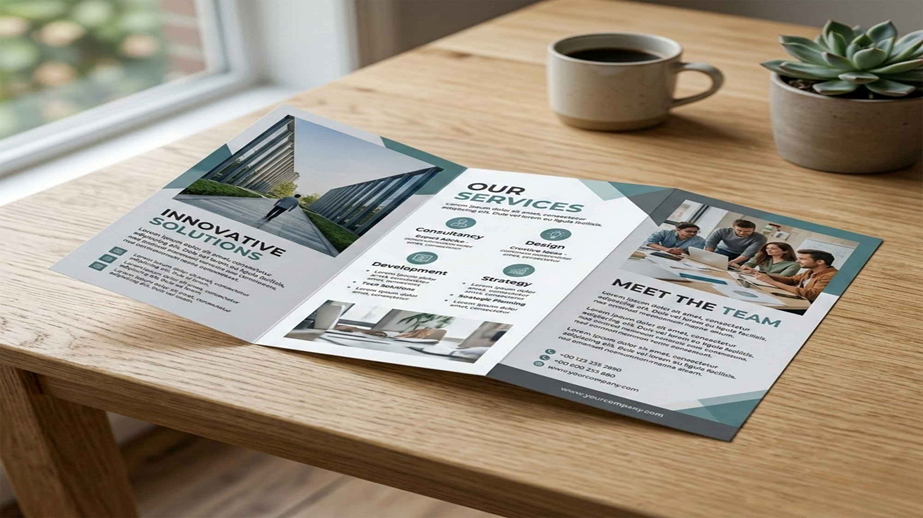
The format should match the purpose. A compact tri-fold can work well at exhibitions or reception desks. A bi-fold can give larger visual panels, while a multi-page brochure or booklet is better for portfolios, detailed services and case studies. The amount of information should determine the format.
2. Strengthen Brand Credibility and Sales Follow-Up
A professional brochure should look like an extension of the company’s wider brand identity. Consistent colours, typography, photography, logo placement and tone create recognition across brochures, websites, presentations and social media.
Print finishing can also influence the experience. Heavier paper, a refined matte finish, selective gloss, embossing or a special fold can add character when used with purpose. Premium finishing should support the brand rather than become decoration for its own sake.
Editing is another important part of professional design. Many businesses try to place every service, statistic and paragraph into one brochure. This often makes the document difficult to read. Strong brochure design removes unnecessary information, highlights the most relevant points and creates enough visual space for the important messages to stand out.
A brochure is also valuable after a sales meeting. A salesperson can leave it with a prospect, send it to another decision-maker or use it as a reference during discussions. A QR code can connect the printed document to a website, portfolio, enquiry form or product video, creating a useful link between offline and online marketing.
Every brochure should finish with a clear next step. The reader should know whether to call, scan a QR code, visit a website, request a quotation or schedule a meeting. When content strategy, copywriting, visual design and print production work together, a brochure becomes more than stationery: it becomes a compact sales asset that can strengthen brand recognition and support business development.