

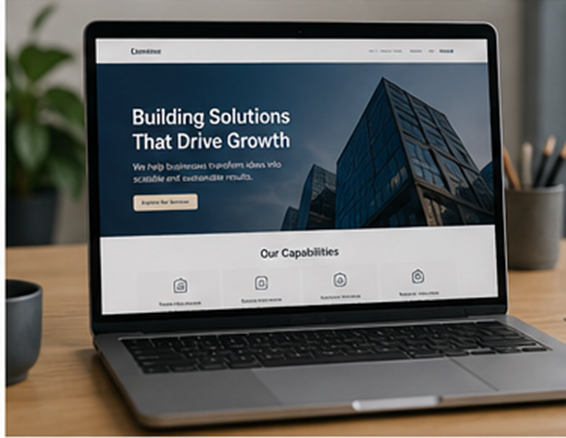
A corporate website in 2026 should do more than look modern. It should help visitors understand the business quickly, find relevant information easily, and feel confident enough to take the next step. Design trends may change, but clarity remains the foundation of an effective website.
The homepage should communicate three things quickly: what the company does, who it serves, and why it is worth considering. Complicated navigation, vague slogans, and excessive animation can distract from this objective. Strong headlines, clear page hierarchy, and visible calls to action make the experience easier for visitors.
Trust signals should appear throughout the website rather than being hidden on a single page. Relevant case studies, client testimonials, certifications, leadership information, real project examples, and transparent contact details can help reduce uncertainty.
Performance is equally important. Heavy media files, unnecessary scripts, and complex effects can make a website frustrating, particularly on mobile networks. Businesses should prioritize fast loading, responsive layouts, accessible typography, and intuitive navigation across devices.
Accessibility should also be considered from the beginning. Good contrast, readable text, keyboard-friendly interactions, descriptive labels, and logical content structure can improve usability for a wider range of visitors.
A premium corporate website is not defined by visual complexity. In many cases, restraint creates a more confident impression. Every design element should support understanding, credibility, or conversion.
Use AI and Personalization Carefully Without Losing Brand Control
AI-assisted experiences are becoming more common in corporate websites, from intelligent search and chat interfaces to personalized content recommendations. When used well, these features can help visitors reach relevant information faster. However, technology should solve a genuine user problem rather than being added simply because it is fashionable.
Personalization should be transparent and useful. A returning visitor may benefit from seeing relevant services, resources, or industry examples, but excessive data collection or overly specific targeting can reduce trust. Businesses should balance relevance with privacy and give users appropriate control over their information.
Content structure is also increasingly important. Websites need well-organized information that can be understood by people, search systems, and AI-powered discovery tools. Clear headings, descriptive page titles, structured information, and authoritative original content can make a company easier to understand across different discovery environments.
Regular improvement should be part of the design strategy. A corporate website should not be treated as a project that ends at launch. Analytics, user behavior, search performance, and customer feedback can reveal where visitors become confused or where valuable opportunities are being missed.
In 2026, the strongest corporate websites will combine clean design with useful technology. They will be fast, accessible, trustworthy, and easy to navigate while using AI selectively to improve the visitor experience. The central principle remains unchanged: a website should make it easier for the right audience to understand, trust, and do business with the company.
