

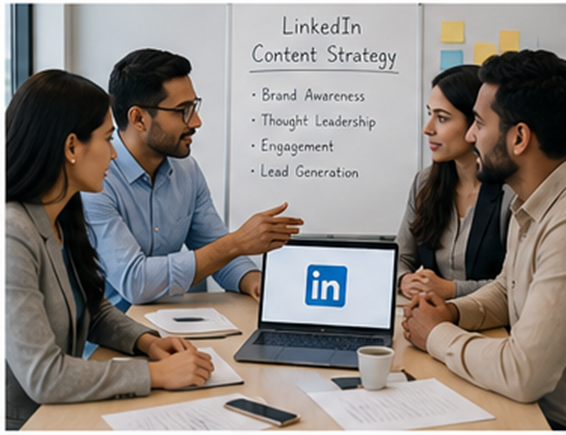
For B2B companies, LinkedIn is most effective when it is treated as a platform for building credibility rather than simply broadcasting company announcements. Business buyers are often researching solutions long before they speak with a sales representative. Consistent, useful content can help a company become familiar and trusted during that decision-making process.
A strong strategy begins by identifying the audience. A CEO, procurement manager, marketing head, and operations leader may all evaluate the same product differently. Content should therefore address their specific challenges, questions, and priorities.
Instead of posting only promotional messages, companies can create content around industry problems. Educational carousels, short insights, case studies, before-and-after examples, founder perspectives, process explainers, and practical frameworks can demonstrate expertise without sounding like a sales pitch. The best content answers questions that potential buyers are already asking.
Employee-led content is another powerful opportunity. Subject-matter experts, founders, and team members can share their experiences in their own voice. This often feels more credible and human than corporate posts alone. A company page can establish consistency, while personal profiles can provide perspective and conversation.
A practical content mix might include thought leadership, educational posts, proof of results, company culture, and occasional direct offers. The objective is not to make every post generate a lead. Instead, the goal is to build recognition and trust repeatedly until the right opportunity appears.
Create a Consistent Distribution and Measurement System
A successful LinkedIn strategy requires consistency, but consistency does not mean posting every day without direction. A simple editorial system can make content easier to sustain. Companies can plan themes around common customer problems, industry trends, services, client success stories, and internal expertise.
Repurposing is particularly useful for B2B teams. One webinar, report, podcast, or case study can become multiple LinkedIn posts. A long-form insight can be converted into short opinion posts, document carousels, videos, statistics, or employee talking points. This reduces content production pressure while maintaining message consistency.
Distribution should also go beyond publishing. Employees can add valuable perspectives in the comments, share company content selectively, and participate in relevant industry discussions. Thoughtful engagement can extend reach while creating genuine professional connections.
Measurement should focus on business relevance, not vanity alone. Impressions are useful, but companies should also monitor profile visits, quality of engagement, website actions, inbound inquiries, conversations with decision-makers, and opportunities influenced by content.
Over time, the best-performing themes will reveal what the audience values. The strategy can then be refined rather than constantly reinvented. For B2B companies, LinkedIn success usually comes from repeated proof of expertise, clear positioning, and consistent visibility—not from chasing a single viral post.
