

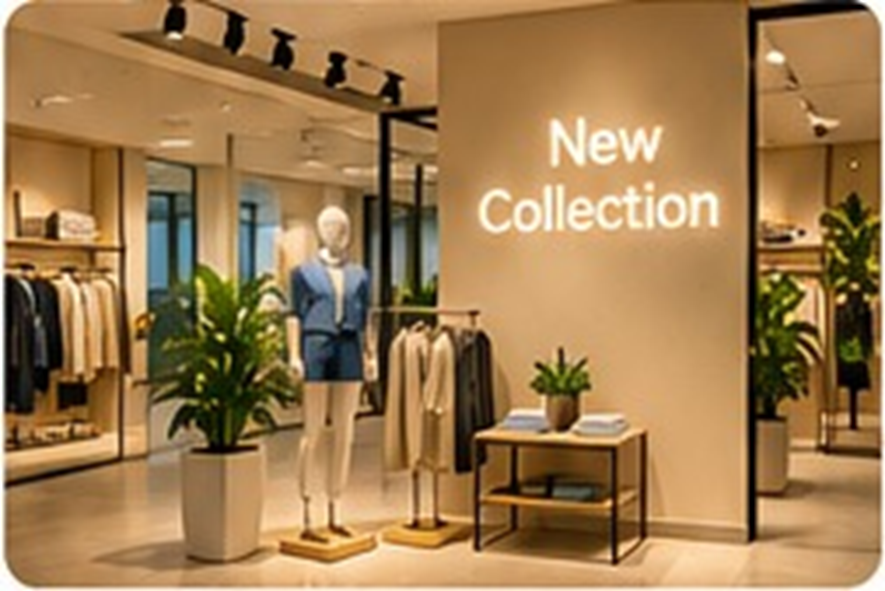
Retail understands the power of experience
Retail stores compete for attention, but successful spaces do more than display products. They guide visitors, communicate a clear identity and create an atmosphere that supports the brand promise. Corporate offices can learn from this approach. An office is not a shop, but it is a place where people experience an organisation first-hand. Clients, candidates, partners and employees all form impressions through the environment around them.
Build a story, not just a logo wall
A logo is important, but it cannot communicate everything about a business. Retail brands often use colour, imagery, product displays and messaging together to create a recognisable world. Offices can use the same thinking. A reception area can introduce the organisation’s purpose. A corridor can show its history or achievements. A collaboration zone can reflect its culture. These elements create a connected story instead of a collection of unrelated decorations.
Guide people through the space
Retail layouts help customers understand where to go and what to explore. Corporate offices also benefit from clear journeys. Use directional signs to make reception, meeting rooms and shared facilities easy to find. Distinguish zones through consistent colours, graphics or naming. Make important information visible without making every wall compete for attention. When people can move naturally through the workplace, the environment feels more welcoming and efficient.
Make messages relevant to the audience
A store changes its displays to suit its customers and products. An office should also consider who uses each area. Visitors may need a clear introduction to the company, while employees may respond more strongly to team stories, values and achievements. Meeting spaces can carry subtle brand cues, while training areas may benefit from informative graphics. The design should respect the purpose of the room and the needs of the people using it.
Consistency creates recognition
Retail brands work hard to make their visual identity consistent across signs, packaging, displays and digital channels. Offices should connect their physical environment to the wider brand system. Use approved colours, logo versions, typography and tone of voice. Make sure wall graphics and signage feel related to the company’s website, presentations and other communication materials. Consistency helps people recognise the brand and makes the organisation appear more considered.
Create moments worth remembering
Retail environments often include a focal point that encourages people to pause, explore or take a closer look. Offices can create similar moments through a distinctive feature wall, an engaging company timeline, a display of products or a well-designed collaboration area. These features should be authentic and useful, not simply designed for photographs. A memorable space gives visitors something meaningful to take away and can strengthen employees’ connection to the workplace.
Treat the office as a brand touchpoint
The biggest lesson from retail is that every detail contributes to the experience. A corporate office communicates through its entrance, signs, walls, meeting rooms and shared spaces. When those elements tell one coherent story, the workplace becomes more than a functional address. It becomes a physical expression of the organisation’s identity.
Measure the experience after the refresh
A refreshed office should be judged by more than photographs. Ask reception whether visitors are finding destinations more easily. Ask employees whether shared spaces feel clearer and more connected to the organisation. Observe whether guests still need repeated directions and whether key brand messages are visible without overwhelming the room. Feedback can guide small refinements, such as moving a sign, simplifying a message or adjusting a graphic. Treat the workplace as an evolving brand environment, not a one-time decoration project.
